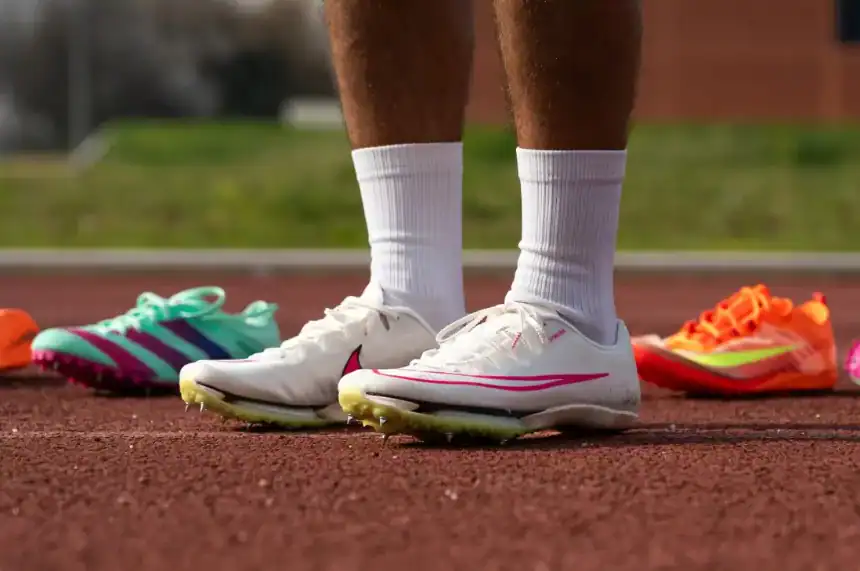
Best Sprint Spikes in 2026: How to Choose the Right Pair


Choosing the best sprint spikes in 2026 starts with your event, your experience, and the way a shoe fits—not the biggest marketing claim. A 100-meter specialist may want a very stiff, aggressive forefoot plate, while a 400-meter runner may prefer a slightly more forgiving feel through the bend and final straight. This guide explains what matters before you buy, with practical advice for US high school, college, and recreational track athletes.
Quick answer: what makes a good sprint spike?
A good sprint spike should fit securely, grip the track, and feel stable at race pace. Look for an event-appropriate spike plate, a lightweight upper that holds your foot in place, and an outsole compatible with the track where you compete. More expensive is not automatically better: the best choice is the pair you can run in confidently and comfortably.
Choose sprint spikes by race distance
100m: acceleration and a responsive forefoot
The 100m rewards a secure fit and reliable traction during acceleration and maximum-velocity running. Many dedicated 100m models use a stiff forefoot plate and minimal cushioning. That aggressive feel can be useful for experienced sprinters but may be uncomfortable for beginners who have not adapted to racing spikes.
200m: grip and control through the curve
In the 200m, the shoe must feel secure while running the bend as well as the straight. A locked-in heel and midfoot can matter as much as a rigid plate. Try a few controlled curve repetitions in practice before racing; if your foot slides or your toes are compressed, the fit is not right.
400m: speed with manageable comfort
For 400m athletes, the best sprint spikes balance responsiveness with enough comfort to maintain form late in the race. Some runners like aggressive sprint models; others prefer a less rigid design. Choose based on how the shoe feels across the full lap, not just during a short acceleration.
Sprint spike features worth comparing
Plate stiffness and propulsion
A stiff plate changes how the shoe bends and can create a more aggressive running sensation. Some premium models use carbon-fiber components or other rigid materials, but not every spike has a carbon plate. A plate does not act as a motor, and performance depends on the athlete, fit, surface, and running mechanics. Beginners should prioritize control and comfort before chasing the stiffest option.
Pin configuration and track rules
Check whether a shoe uses replaceable pins or fixed traction elements. Track facilities and meets may restrict pin length or shape. Do not assume one pin setup is legal everywhere: review the venue’s rules and your competition’s equipment guidance before race day. Keep a spike wrench and approved replacement pins in your bag.
Upper, heel security, and toe room
The upper should hold the foot without painful pressure. Your heel should not lift noticeably, and your toes should not curl against the front. Sprint spikes often fit closer than everyday trainers, but sizing varies by model. Consult the specific product size chart and, when possible, try the shoes with the socks you race in.
Weight and cushioning
Lightweight construction can feel fast, but a small weight difference does not guarantee a better result. Very minimal shoes may be demanding on calves and feet. Consider your training history, race distance, and tolerance for a firm underfoot feel. Most everyday mileage belongs in appropriate training shoes, not highly aggressive racing spikes.
Sprint spikes comparison checklist
| Feature | Beginner priority | Experienced sprinter priority |
|---|---|---|
| Fit | Secure, comfortable, no pressure points | Precise lockdown at race pace |
| Plate | Manageable stiffness | Event-specific stiffness and feel |
| Traction | Venue-approved pin setup | Race-surface compatibility |
| Upper | Easy to adjust | Minimal movement on bends |
| Budget | Value and reliable fit | Upgrade only for a clear benefit |
How to choose your first pair of sprint spikes
First, identify your primary event and ask your coach whether your team has specific track or spike-pin rules. Second, compare shoes designed for that event rather than buying a distance spike because it looks similar. Third, measure both feet and check the individual model’s sizing guidance. Fourth, wear the spikes for a short, controlled practice session before a meet. Finally, inspect the pins and upper after use so small problems do not become race-day surprises.
New to track? Read our track shoes for beginners guide for a broader introduction. If you are still deciding whether to race in spikes or trainers, see track spikes vs. running shoes.
When should you replace sprint spikes?
There is no universal mileage limit for sprint spikes. Replace a pair when the upper no longer holds your foot securely, the plate is damaged, traction is compromised, or the shoes consistently cause discomfort despite correct sizing. Worn removable pins may be replaceable without buying new shoes. Dry damp shoes at room temperature and avoid leaving them in extreme heat.
Common mistakes to avoid
Do not buy solely by color, price, or an athlete endorsement. Avoid changing into unfamiliar spikes on competition day. Do not wear metal-pin track spikes on concrete or other surfaces where they may slip or damage the pins. And do not assume an aggressive carbon-plated model will automatically improve your personal best: technique, training, and a well-matched fit remain essential.
Frequently asked questions
Are sprint spikes suitable for beginners?
Yes, when the athlete is ready to use them and chooses a manageable model. Introduce them gradually during supervised track sessions rather than wearing them for every workout.
Can I use the same spikes for 100m, 200m, and 400m?
Often, yes. Many sprint spikes cover all three events, but comfort and stability requirements differ. A 400m runner may prefer a less aggressive feel than a 100m specialist.
Should sprint spikes feel tight?
They should feel snug and secure, not painful. Numbness, pinching, or curled toes are signs to reassess the fit or size.
Do I need carbon-plated sprint spikes?
No. Plate material is one feature among many. A correctly fitted, event-appropriate spike can be a better purchase than a premium model that does not suit your feet or experience.
Shop sprint spikes at TrackSpikes
Ready to choose your race-day pair? Shop sprint track spikes at TrackSpikes and compare the available styles, sizes, and product details. Start with your event and fit requirements, then select the shoe that matches your needs. For help choosing, use the contact options on our store before ordering.
For more on choosing the right pair for workouts, read our guide to choosing track spikes for training. For official competition equipment guidance, consult World Athletics technical information and your meet organizer’s published rules.
Sprint spike buying checklist for 2026
Before choosing sprint spikes for the 100m, 200m, or 400m, compare event suitability, fit, forefoot plate stiffness, traction, and the rules of the track where you compete. A model that feels responsive over 100m may not be comfortable for every runner over a full lap.
- Check the manufacturer’s size chart and verify secure heel lockdown.
- Confirm the permitted spike-pin length and configuration.
- Test new shoes during controlled sessions before race day.
- Choose comfort and event suitability over unverified promises of faster times.
For more context, read our track spike selection guide.